Picture a late-June evening in Verona. The grill is going, the kids are chasing fireflies, and the sun is low enough that dappled shade feels like a gift. Now fast-forward to a drizzly October Saturday when you want to sit outside with coffee and stay dry. Then February, when 14 inches of snow land overnight.
That’s the pergola vs gazebo question in a nutshell. You aren’t picking a structure for one perfect day. You’re picking one that has to earn its keep through four very different Wisconsin seasons.
You’re also not alone in weighing it. The 2026 U.S. Houzz Outdoor Trends Study found that outdoor feature projects remain the most common (72%), followed by structures (56%), and that professional involvement in outdoor renovations reached a new high in 2026, with 71% of homeowners hiring a pro, up from 65% in 2024.
Here’s how to make the right call for your yard.
The Difference Between Pergola and Gazebo, Explained Simply
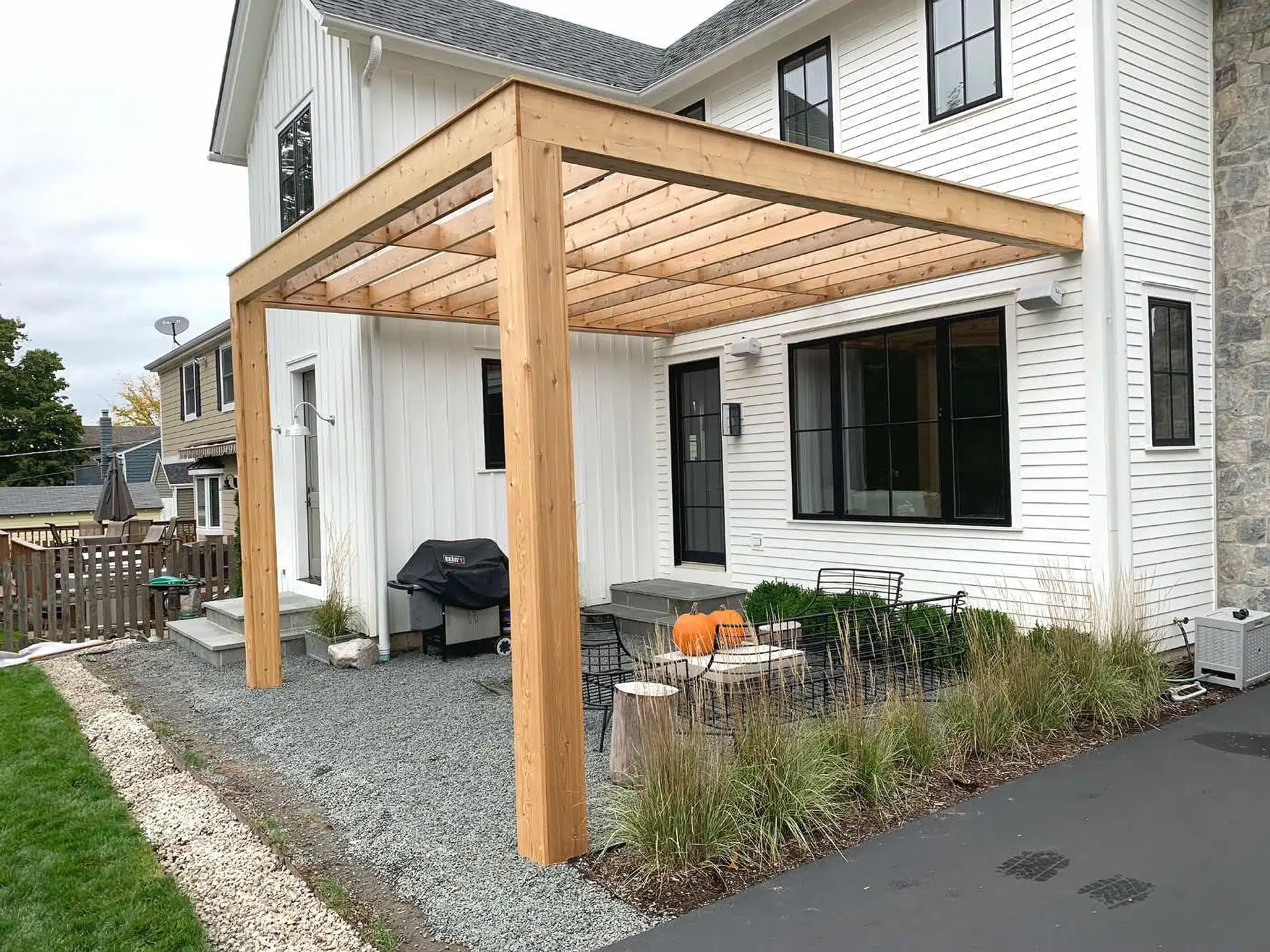
The core difference between a pergola and gazebo comes down to the roof and the walls.
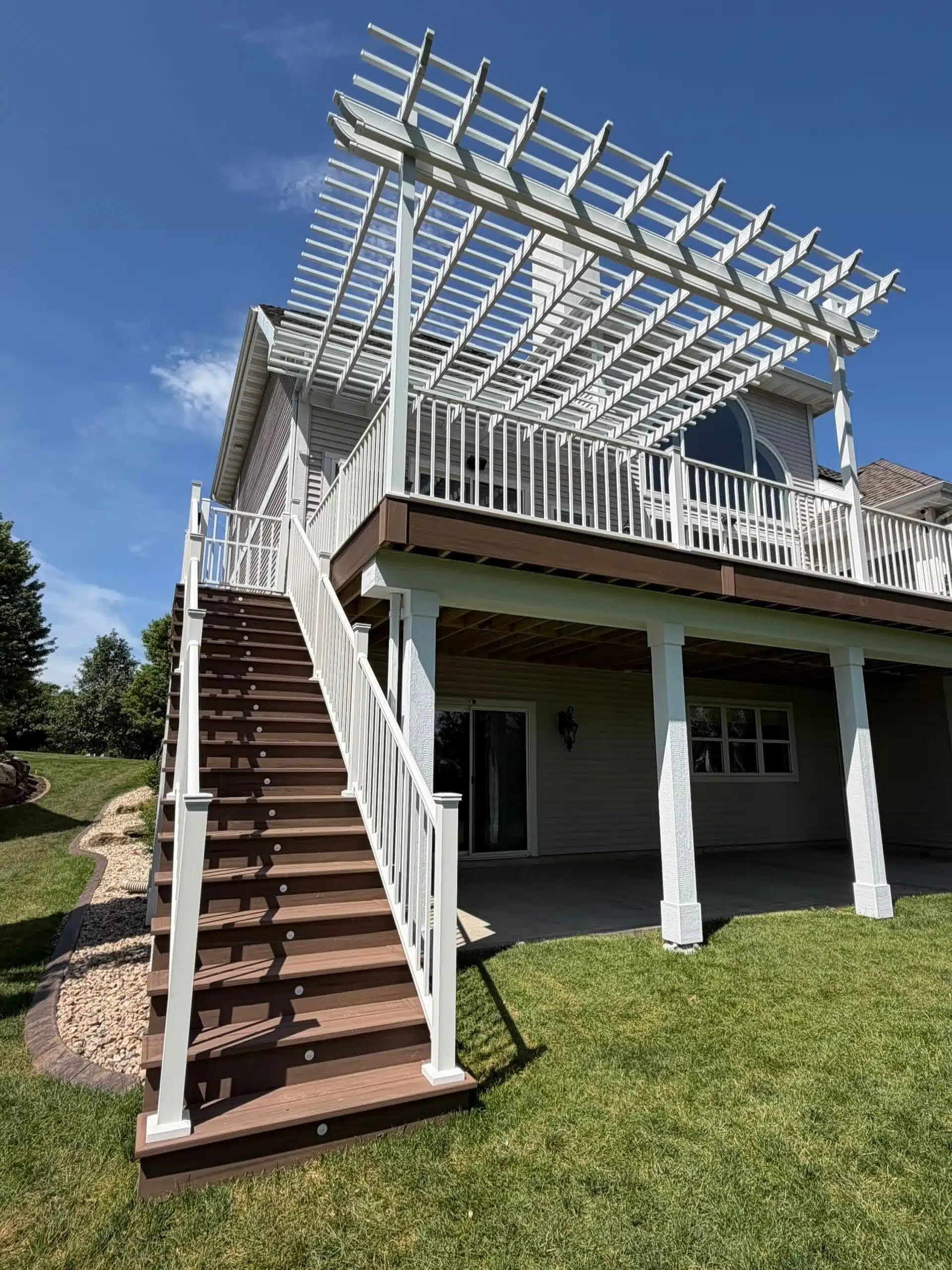
- Pergola: Open sides, with a roof of beams, rafters, or adjustable louvers. Built to filter sun, frame a space, and keep sightlines open. Can be attached to your home, freestanding, or mounted on a deck.
- Gazebo: A freestanding pavilion with a solid, pitched roof, usually octagonal, square, or rectangular. Built to shelter people from sun and rain, often with a built-in floor and railings.
Think of a pergola as an outdoor ceiling and a gazebo as an outdoor room.
Table 1: Gazebo vs Pergola at a Glance
| Feature | Pergola | Gazebo |
| Roof | Open beams, or motorized louvers that open and close | Solid roof in metal, shingles, or lattice |
| Sides | Open; screens or curtains optional | Typically open with railings; screens optional |
| Placement | Attached, freestanding, or deck-mounted | Freestanding |
| Rain protection | Minimal (wood) to full (closed louvers) | Strong with a solid roof |
| Shade style | Dappled, adjustable | Full, fixed |
| Visual footprint | Light, architectural | Destination focal point |
| Best for | Patio dining, deck shade, outdoor kitchens | Hot tub shelter, garden retreat, all-weather gathering |
How Each One Handles a Wisconsin Year
Southern Wisconsin throws everything at an outdoor structure: humid 90-degree afternoons, spring downpours, freeze-thaw swings, and heavy snow.
- Summer: A pergola shines here. Open rafters let breezes move through, and a louvered roof lets you dial shade up or down by the hour. A gazebo gives deeper, cooler shade but can feel enclosed on still, muggy nights.
- Fall: This is where shelter pays off. A Bromic Heating survey of homeowners found that eighty-six percent say they would spend significantly more time outdoors if their space stayed usable into cooler evenings. A gazebo’s solid roof, or a pergola with closed louvers, plus a heater, keeps September and October in play.
- Winter: Snow is the real test. A pitched gazebo roof sheds snow naturally. For louvered aluminum pergolas, Deck Dogs notes that snow capacity depends on the specific system and engineering, so you should follow the manufacturer’s guidance on louver position and winter operation.
- Spring: Drainage matters. Quality louvered systems include integrated drainage, including post drainage, which keeps water off your patio and away from your foundation.
Pro Tip: If you want to use your space from April through October, plan for heat and power on day one. Running conduit for a heater, fan, and lighting during construction costs far less than retrofitting it later.
Materials and Maintenance
Your material choice shapes how much weekend time goes into upkeep.
Table 2: Material Options by Structure
| Material | Available For | Maintenance | Look | Relative Investment |
| Cedar | Pergola and gazebo | Restain or seal every few years | Warm, classic | Mid-range |
| Pressure-treated lumber | Pergola | Stain or paint; periodic upkeep | Rustic, paintable | Value |
| Redwood | Gazebo | Periodic sealing | Rich, traditional | Mid to upper |
| Vinyl | Gazebo | Wash only; resists rot and warping | Clean, bright | Mid-range |
| Powder-coated aluminum | Pergola (louvered) and gazebo | Rinse occasionally | Sleek, modern | Premium |
| Steel | Gazebo | Watch for scratches and rust | Industrial, modern | Mid to upper |
Deck Dogs installs louvered pergolas built from powder-coated 6063-T6 aluminum from The Luxury Pergola, a U.S.-based manufacturer. Those systems use motorized louvers that open for light and airflow and close for shade and rain, blurring the old gazebo vs. pergola line considerably.
Pro Tip: Wood looks great on day one, but in Wisconsin it needs consistent care. If you’d rather spend Saturdays using the space than staining it, lean toward aluminum or vinyl.
Permits, Footings, and Placement in Dane County
Whichever you choose, the parts you can’t see matter most.
- Permits: Rules vary. Permit rules differ between Madison, nearby municipalities, and unincorporated Dane County. Deck Dogs states that most gazebo installations in Madison require a permit, and its team handles the paperwork.
- Footings: Posts need footings set below the local frost line to resist frost heave. Your builder and inspector confirm the required depth.
- Attachment: Attached pergolas require flashing and a wall-attachment plan. Deck-mounted pergolas require a review of deck framing, beams, and footings.
- Foundation: Gazebos can sit on a concrete slab, paver stones, or a wooden deck foundation.
Pro Tip: Before you choose a spot, watch it for a full afternoon. Note where the sun sits at 5 p.m., where water pools after rain, and where snow drifts in winter. Those three observations should decide placement.
Pergola or Gazebo: Match It to How You Live
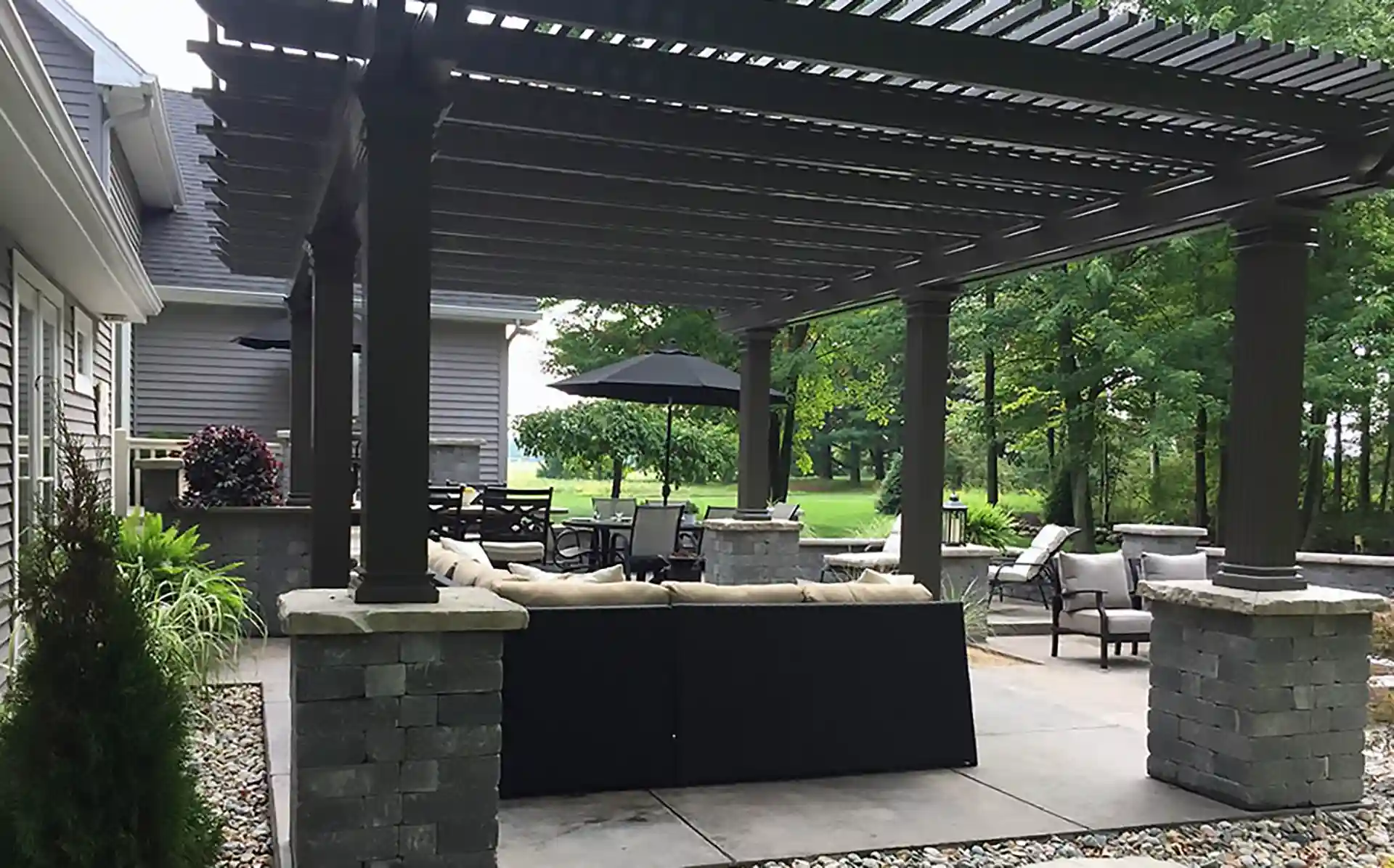
Choose a pergola if you:
- Want to extend your home’s living space onto a deck or patio
- Love an open, airy feel with adjustable light
- Need to cover an outdoor kitchen or dining zone
- Want motorized shade and rain control (louvered)
Choose a gazebo if you:
- Want a destination spot across the yard
- Need dependable cover for a hot tub or pool area
- Prefer a traditional, cottage-style look
- Want built-in seating and a defined room
Why Wisconsin Homeowners Build With Deck Dogs
Deck Dogs has been building outdoor living spaces across South Central Wisconsin since 2009. The family-owned team has built over 1,000 decks and uses its own crews, with no subcontractors; the same local team handles planning, construction, and final review. Designs are based on each property rather than standard kits, and work is backed by a “two-year limited warranty” on workmanship, plus manufacturer coverage on materials.
Frequently Asked Questions
- What’s the main difference between a pergola and a gazebo?
It’s mostly the roof. A pergola has an open or adjustable roof that filters sunlight, while a gazebo has a solid roof that fully blocks sun and rain. Pergolas can attach to your house; gazebos stand on their own. - Which holds up better in Wisconsin snow?
A gazebo’s pitched roof sheds snow on its own, which is a nice advantage. A louvered aluminum pergola can handle winter well too, as long as you follow the manufacturer’s snow load guidance and louver settings. Wood pergolas with open rafters let most snow fall through. - Do I need a permit for a pergola or gazebo near Madison?
Most likely, yes. Most gazebo installations in Madison require one, and requirements differ between Madison, surrounding towns, and unincorporated Dane County. Deck Dogs handles permit and zoning coordination for you. - Can I put a pergola on my existing deck?
Often, yes. The deck’s framing, beams, and footings must be reviewed first to confirm they can support the added load. If they can’t, the pergola can get its own posts and footings that pass through or sit beside the deck. - How long does installation take?
A custom gazebo typically takes a few days to two weeks to install. Pergolas follow a similar range depending on size, footings, and whether you add motors, lighting, or drainage. Deck Dogs gives you a specific timeline with your proposal. - Which costs more, a pergola or a gazebo?
It depends more on size and materials than on the structure type. A cedar or pressure-treated pergola usually sits in the mid-range, while a motorized louvered aluminum pergola is a premium investment. Gazebos with solid roofs, floors, and electrical fall in between or above. A free estimate gives you real numbers for your yard.
Let’s Build Your Perfect Outdoor Room
Still torn on pergola vs. gazebo? You don’t have to decide alone. Deck Dogs will walk your yard, study sun, drainage, and access, then show you which option fits the way you live. No pressure, no upsells.
Get Your Free Estimate or call (608) 807-6593.