Looking for a quick answer? Start with your home’s style and sunlight exposure: choose warmer, earthy composite decking colors for traditional houses and cooler grays for modern exteriors. Deck Dogs recommends composite decking colors that balance appearance and performance to create a low‑maintenance outdoor space homeowners enjoy for years; composite decking colors are often the best choice for busy families.
Deck Dogs helps homeowners weigh composite decking color, climate, and maintenance so you select the right shade with confidence and clarity. This quick composite decking color guide covers popular composite decking color categories, brand options, practical design tips, and upkeep advice so you can move from inspiration to decision.
Deck Dogs knows how important the right look is for your home and neighborhood, and our team helps homeowners pick composite decking colors that match both lifestyle and architecture in South Central Wisconsin. Our experience building custom decks without subcontractors means we can recommend composite decking colors tied to real-world performance and long-term satisfaction.
Choosing the right shade should feel exciting, not stressful; the right composite decking colors make your outdoor living feel like an extension of your home and can also impact comfort, cost, and maintenance over time. Read on to learn what to consider, how top brands present composite decking color options, and practical ways to mix and match for a custom look.
Popular Composite Decking Color Categories
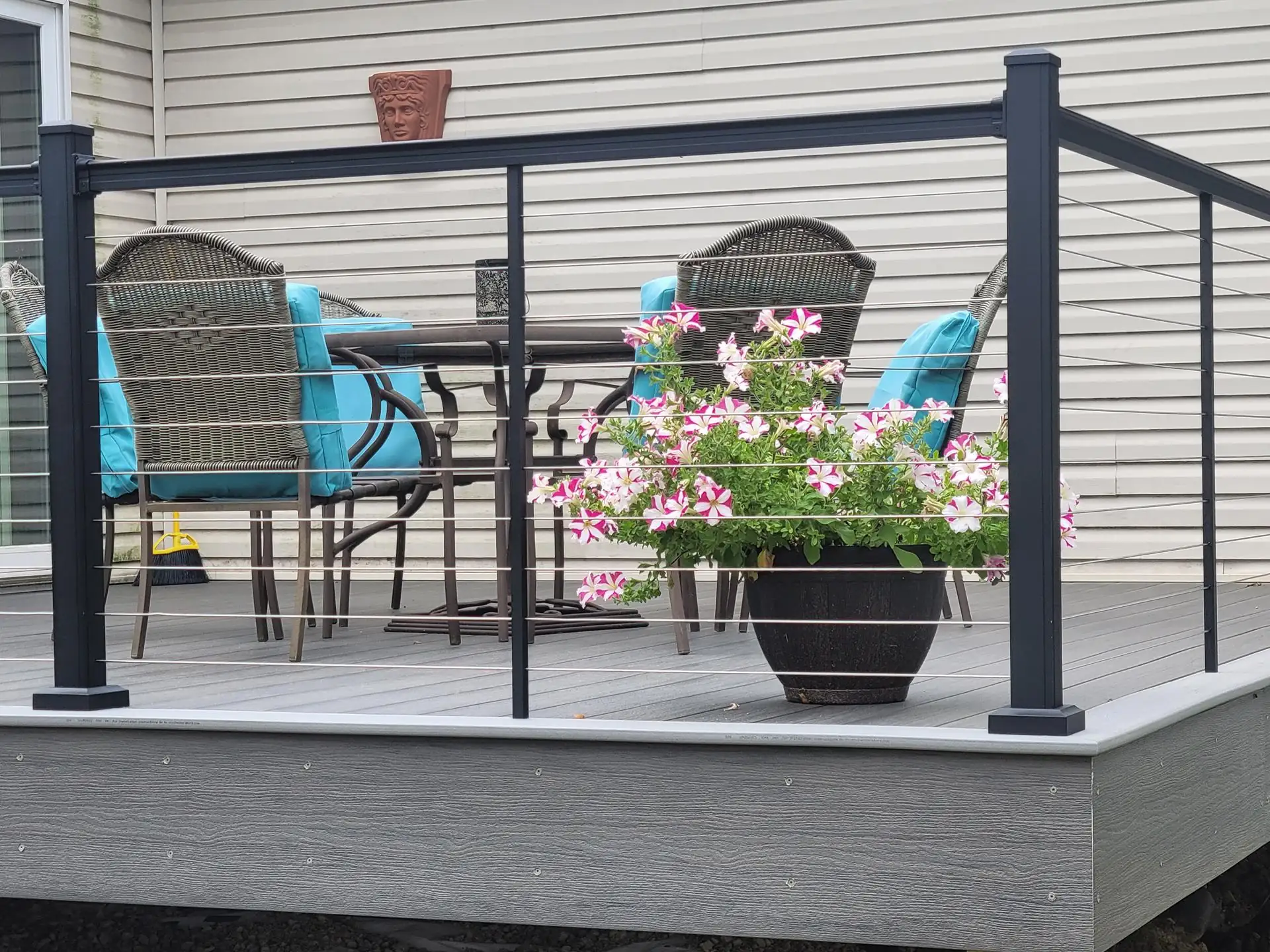
Composite decking colors come in families that suit different architectural styles and lifestyles. Understanding these categories helps you narrow options quickly and pick a direction that complements your home.
Earthy Tones
Earthy composite decking colors—rich browns, toasted walnuts, and chestnuts—mimic natural wood and add warmth to outdoor spaces. These colors hide dirt well, pair with natural landscaping, and suit traditional or craftsman‑style homes.
- Warm Appeal: Earthy tones create a cozy, classic atmosphere that complements wooden trim and stone facades. Rich browns are forgiving of light staining and blend well with outdoor furniture.
- Practical Benefits: These shades tend to mask minor wear and are a good match for homes with many trees or garden beds. Maintenance remains easier than with natural wood while keeping a familiar look.
Homeowner Insight: If you’re replacing an older wood deck, starting with earthy composite decking colors often delivers the “same but better” look many families want.
Gray Shades
Gray composite decking colors—from cool slate to warm driftwood—are the most popular contemporary choice. Grays pair well with modern, coastal, and minimalist home styles and provide a neutral platform for colorful furniture and plants.
- Modern Versatility: Gray shades work with many siding and railing options and remain on trend without overpowering a home’s exterior. They also reflect light differently across the day, giving subtle visual depth.
- Color Matching: Grays pair especially well with white or black railings and stainless or aluminum accents. They allow homeowners to emphasize other design elements like planters or lighting.
Planning Tip: When choosing composite decking colors in the gray family, compare samples next to your siding and roof so you don’t end up with clashing undertones.
Reds and Mahogany
Reds and mahogany composite decking colors lend a more formal, rich appearance reminiscent of hardwoods like mahogany or redwood. These choices are less common but create a distinct, upscale look when paired with the right architecture.
- Elegant Feel: Red and mahogany hues add a touch of luxury and look striking against light‑colored siding. They work well for homeowners who want the warmth of wood with the low maintenance of composite materials.
- Consider Contrast: These deeper tones contrast best with neutral trim and lighter railings to avoid a heavy visual effect. They may show sunbleaching slightly differently, so consult with your builder on long‑term color stability.
Blues and Greens
Blues and greens are less common composite decking colors but can create unique coastal or cottage vibes that stand out in tasteful ways. Use them sparingly or as accents if you want a distinctive outdoor personality.
- Accent Use: Blues and greens work well as accent inlays, stair treads, or seating areas rather than the entire deck surface. They give a custom, playful edge when balanced with neutral field boards.
- Style Consideration: These colors suit waterfront properties or bold, eclectic home palettes where outdoor features act as design statements. They require thoughtful pairing with landscaping and furniture.
Blondes and Whites
Blonde and white composite decking colors brighten outdoor spaces and make smaller areas feel more open. They are popular for coastal and modern designs, but they show dirt more readily and may require more frequent surface cleaning.
- Brightening Effect: Light decking makes shaded yards feel airier and reflects heat on sunny days. It’s a common choice for rooftop decks and patios that benefit from visual expansion.
- Upkeep Note: Lighter boards can show pollen, mud, and pet marks sooner than darker boards, so plan for occasional cleaning to keep the bright look.
Cost Consideration: Light and dark composite decking colors are usually priced similarly; what changes your overall cost is the product line you choose, not just the shade.
Factors To Consider When Choosing A Decking Color
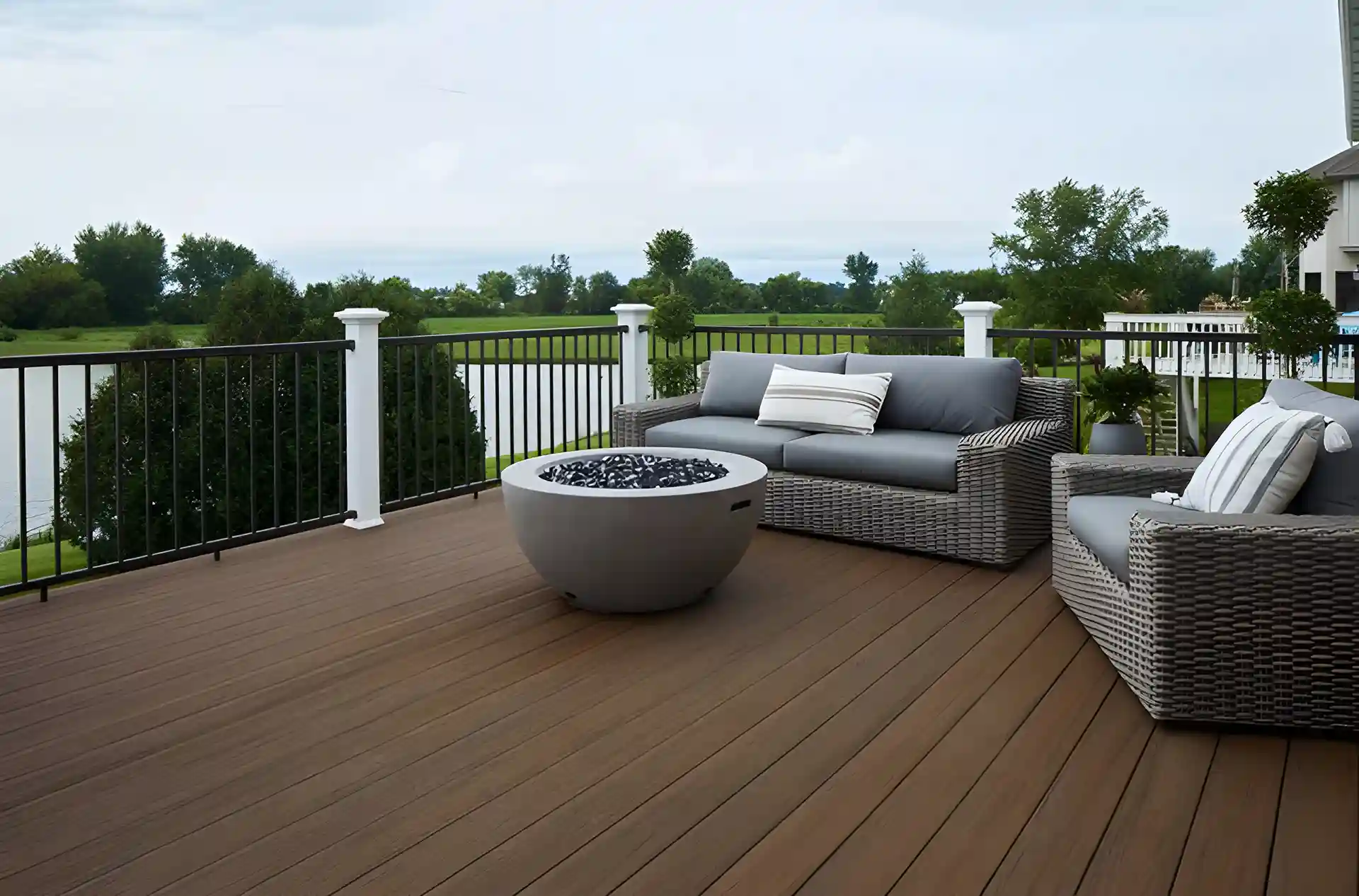
Pick a deck color with these real‑world considerations in mind to ensure long‑term satisfaction. Each factor affects both aesthetics and performance, so weigh them together rather than in isolation.
Home Exterior Colors
Your deck should complement the home’s siding, trim, roof, and landscape rather than compete with them. Aim for contrast or harmony: a mid‑tone deck can bridge a dark roof and light siding, while a matching tone feels seamless.
- Match composite decking colors to existing trim for a pulled‑together look.
- Use contrast if you want the deck to read as its own “outdoor room.”
- Check samples at different times of day to see how sun changes perception.
Pro Tip: Lay out at least three composite decking color options on your existing patio or old deck and view them in morning, midday, and evening light before deciding.
Climate Considerations (Heat Absorption And UV Resistance.)
Darker composite decking colors absorb more heat and can become warmer underfoot in direct sun, while lighter colors stay cooler. Discuss UV resistance and color retention with your builder to choose materials formulated for your climate.
- Lighter composite decking colors can be more comfortable for bare feet on south‑facing decks.
- Darker colors may be better for partial‑shade yards where extra warmth is welcome.
- Ask about fade and stain warranties from the brands you’re considering.
Maintenance Levels (How Color Affects Cleaning And Upkeep.)
Darker colors hide scuffs and small stains better, while lighter colors look cleaner but may need more frequent washing. Composite decking still requires less maintenance than wood, but color choice influences cleaning frequency and visible wear over time.
- Choose mid‑tone composite decking colors if you want a balance between hiding dirt and staying cool.
- Plan for seasonal rinsing and light scrubbing on high‑traffic areas like stairs.
- Talk with your builder about manufacturer‑approved cleaners for the brand you select.
Aesthetic Preferences
Consider the mood you want: warm and traditional, cool and modern, or bold and custom. Your lifestyle—kids, pets, frequent entertaining—should guide how forgiving you need the surface to be.
- Entertaining often? Neutral composite decking colors give flexibility as your furniture style changes.
- Have pets or kids? Slightly varied, streaked colors can disguise paw prints and crumbs between cleanings.
- Want a “wow” factor? Use a classic base color with bolder accent boards for borders or inlays.
Why Deck Dogs Is the Right Partner for Your Composite Decking Colors
Choosing composite decking colors is easier when you have a local expert who understands both design and Wisconsin’s climate. Deck Dogs brings years of deck‑building experience, a dedicated in‑house crew, and a clear process that keeps your project on track from first samples to final walkthrough.
- Family-Owned, Subcontractor-Free Builds: Every deck is managed and built by Deck Dogs’ own team, so communication, timelines, and craftsmanship stay consistent from start to finish.
- Local Expertise in South Central Wisconsin: With 1,000+ outdoor projects completed across the Greater Madison area, Deck Dogs understands how composite decking colors perform through snow, heat, and humidity.
- Premium Composite Decking Brands: The team regularly installs leading composite products such as Deckorators and TimberTech, helping you compare composite decking color options along with warranties and performance.
- Simple, Clear Process: From personalized consultation and custom design to detailed estimates and in‑house installation, Deck Dogs follows a step‑by‑step process that makes planning and timelines more predictable.
- Transparent Pricing & Warranty Support: You’ll receive clear cost breakdowns and guidance on both Deck Dogs’ own limited warranty and manufacturer warranties for your chosen materials.
If you’re comparing composite decking colors and want help narrowing them down, a quick design conversation can clarify budget, timeline, and brand options. Request a free estimate to see how Deck Dogs would approach your space.
Top Composite Decking Brands And Their Color Offerings
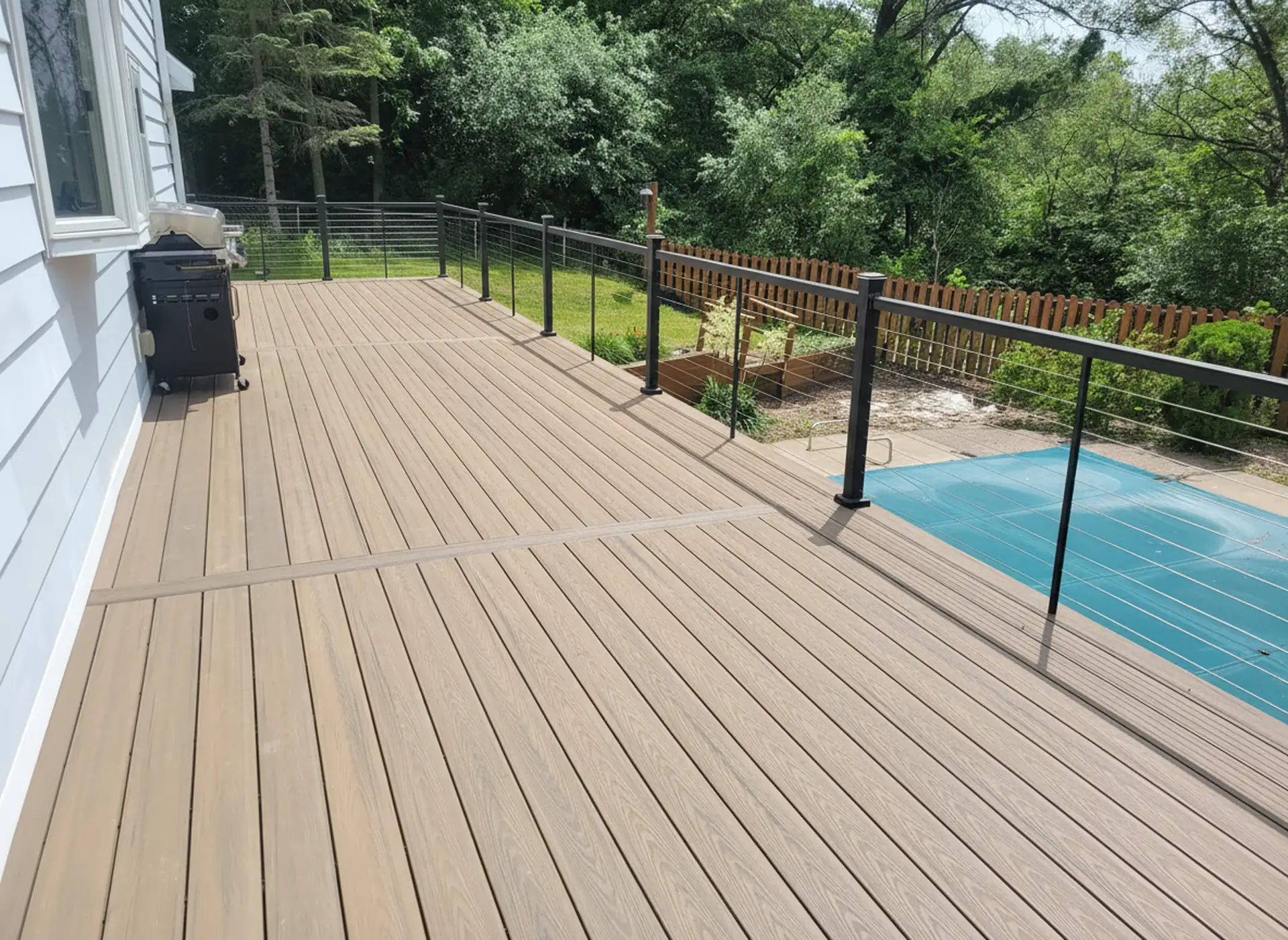
Leading composite brands each have signature color palettes and manufacturing approaches that affect look and performance. Deck Dogs works with top brands so we can recommend color sets that match your priorities.
Trex
Trex offers a wide set of tones in multi‑shade boards that mimic wood grain while prioritizing fade resistance and slip performance. Their collections often highlight grays and browns that are homeowner favorites for balanced aesthetics and durability.
TimberTech
TimberTech provides both capped composite and PVC collections with detailed grain patterns and consistent color retention. Deck Dogs installs TimberTech/AZEK products and can walk you through their specific color families and warranties during a consultation.
Fiberon
Fiberon blends traditional wood looks with contemporary grays and blended grain patterns for a versatile palette. They emphasize low maintenance and realistic textures, helping homeowners get a wood‑like appearance without regular sealing or staining.
MoistureShield
MoistureShield focuses on performance near pools and wet areas, offering color choices that suit outdoor living while resisting moisture damage. Their palettes include durable neutrals and richer tones suitable for both modern and classic aesthetics.
| Color Category | Typical Brands | Maintenance & Heat Notes |
|---|---|---|
| Earthy Browns | Trex, Fiberon | Hides dirt; moderate heat absorption |
| Gray Shades | Trex, TimberTech | Low visual contrast; cooler in sun |
| Light Blondes/Whites | TimberTech, MoistureShield | Shows dirt; reflects heat |
Planning Tip: As you compare composite decking brands and colors, look beyond brochures—ask to see photos of real projects or a gallery so you can see how those colors look installed.
To see how different composite decking colors look in finished spaces, browse Deck Dogs’ project photos and service pages for ideas on layouts, railings, and deck features. Explore composite deck options or visit the areas we serve page to confirm service in your neighborhood.
Design Tips For Incorporating Color Into Your Deck
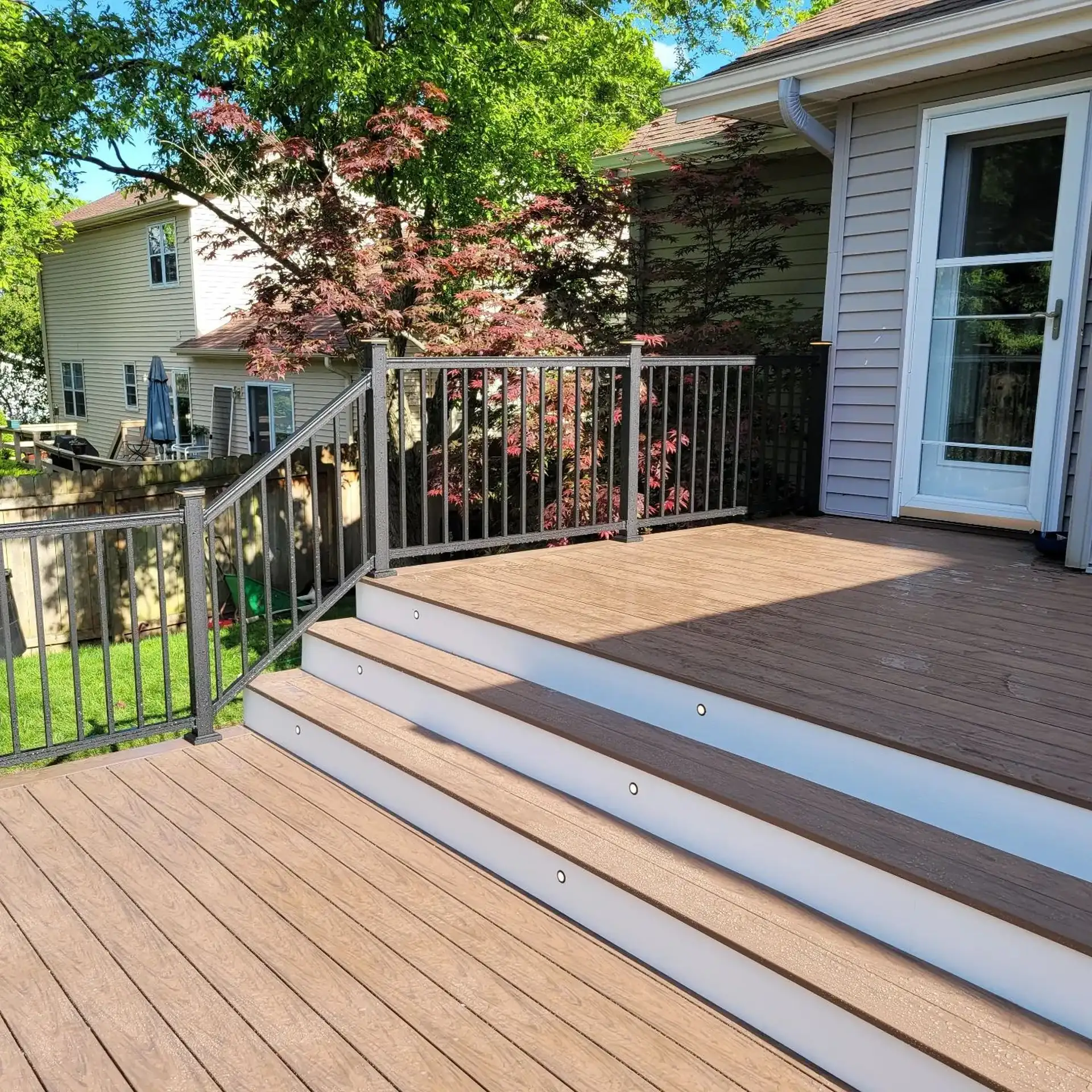
Color is a design tool: used correctly, it elevates the deck from functional surface to memorable outdoor room. These practical tips help you achieve a high‑end look without overcomplicating the build.
Mixing Colors For A Custom Look.
Mixing field boards and accent boards creates contrast that reads as intentional and custom. Use a darker border or stair treads with lighter field boards to define circulation and frame the deck visually.
- Choose one main composite decking color for the field and one or two accent shades.
- Keep accent colors in high‑impact zones, like stairs, borders, or a designated dining area.
- Use similar undertones (all warm or all cool) so the palette feels cohesive.
Using Borders And Picture Framing For Added Flair.
Picture framing—running a contrasting border around the deck—adds crisp detail and makes decks appear larger and more refined. This technique also simplifies transitions to stairs and landings.
- Add a single or double border in a darker composite decking color to “outline” the deck.
- Consider matching the border to your railing color for a unified look.
- Use picture framing to visually separate spaces, like seating and grill zones.
Deck Inlays And Design.
Deck inlays—small areas of contrasting color or material—create focal points for seating, dining, or a grill zone. Inlays let you introduce bolder hues like blues or greens in controlled amounts for personality without overwhelming the space.
- Border Use: A contrasting border defines edges and stairs, making the deck look custom and intentional. Borders also help hide fasteners and trim transitions for a clean finish.
- Accent Boards: Use accent boards on stairs or around built‑in seating to guide movement and add safety cues. Accent boards can be used to integrate lighting and non‑slip surfaces.
- Material Pairing: Pair composite with metal or glass railings to create modern contrast and reduce visual weight. The right railing can elevate a simple composite decking color palette into a considered design.
Pro Tip: During design, ask your builder to show a simple 3D layout or sketch with your chosen composite decking colors so you can see borders, inlays, and railings together before installation.
Cost Considerations
Color itself rarely changes the core material cost dramatically, but premium collections and specialty finishes can add to the price. Investing in higher‑performance, fade‑resistant collections often pays off over time with less upkeep and longer visual life.
Lower‑cost palettes may be available in entry‑level composite ranges, but weigh upfront savings against expected longevity and warranty coverage when selecting a composite decking color and brand. Talk through total project cost—including framing, railings, and features—so you understand how your color choice fits into the overall budget.
Cost Consideration: If you’re deciding between two composite decking colors in different product lines, ask your builder to price both options so you can see how much the upgrade really affects the final cost.
Planning a new deck or a resurfacing project? A short conversation about budget and timeline can help you decide which composite decking colors and product lines make the most sense. Request a free estimate to talk through costs and design options with the Deck Dogs team.
Maintenance And Longevity Of Decking Colors
Composite decking keeps color better than painted or stained wood, but sunlight, heat, and time will affect any surface. Choosing the right product and following manufacturer cleaning guidance preserves vibrancy and performance.
How To Maintain Color Vibrancy Over Time.
Regular cleaning with manufacturer‑approved cleaners prevents buildup that dulls finish and highlights. Remove debris, avoid harsh solvents, and schedule an annual wash to keep boards looking their best.
- Rinse off pollen and dirt in high‑season to protect your composite decking color.
- Spot‑treat food or grease spills near grills soon after they occur.
- Follow the brand’s maintenance guide so you don’t void any warranties.
Protective Coatings And Cleaning Tips.
Most composite decking manufacturers do not require sealers; instead, they recommend periodic cleaning and spot treatment for stains. Deck Dogs recommends matching cleaning methods to the brand you choose to avoid damaging capped coatings.
Maintenance Tip: Set a reminder to deep clean your composite decking colors once a year—often in spring—so the deck is ready for the main outdoor season.
If you’re comparing maintenance between wood and composite, review Deck Dogs’ detailed overview of composite deck benefits so you can see how color retention and upkeep differ over the long term.
Professional Deck Installation Services In South Central Wisconsin
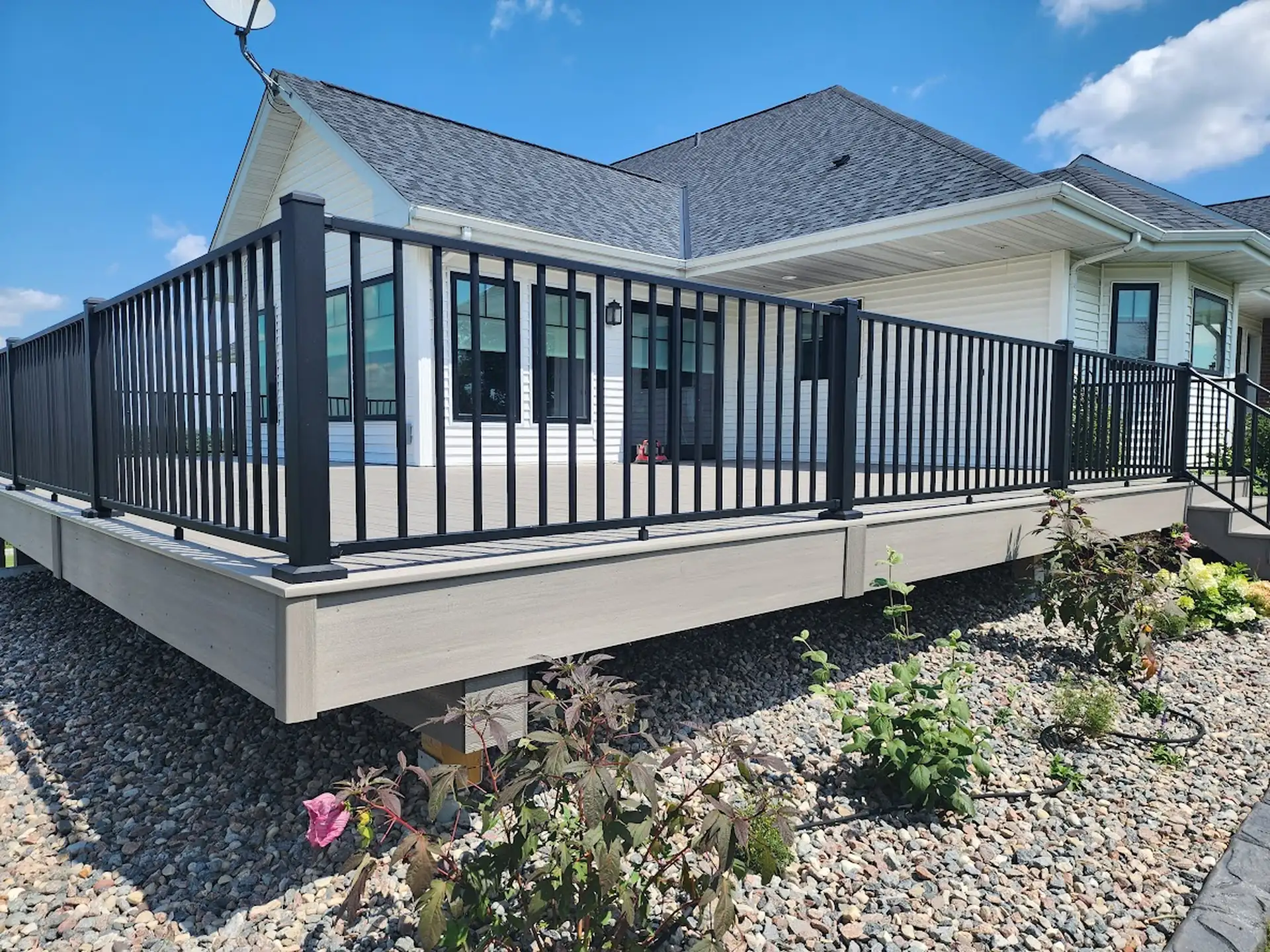
Working with an experienced local builder ensures color choices and material selections perform well in local climate and code conditions. Deck Dogs builds decks across South Central Wisconsin and handles design through installation with an in‑house team—no subcontractors—so you get consistent craftsmanship and clear communication.
We offer free consultations and material walkthroughs to help homeowners evaluate composite decking colors and brands before committing. For custom color pairings, framing details, or specialty inlays, we’ll provide samples and mockups so you can visualize the finished result.
Wondering which composite decking colors will work best for your home near Madison? Use a no‑obligation design consultation to review samples at your house, discuss project timelines, and understand how different options affect cost and maintenance. Request a free estimate to discuss your project with our team.
Frequently Asked Questions
What are the most popular composite decking colors?
Gray tones and earthy browns are currently the most popular composite decking colors because they work with a wide range of home styles. These shades balance trendiness with long‑term appeal and mask wear well.
How do I choose the right composite decking color for my home?
Start by considering your home’s exterior colors, amount of sun exposure, and how much maintenance you want to do. Compare at least a few composite decking colors on site, and consult samples in place—Deck Dogs can bring boards to your home so you can view them in actual light.
Are there any composite decking brands with unique color offerings?
Yes—brands like TimberTech, Trex, and Fiberon each offer unique palettes and finishes that emphasize different grain patterns and fade resistance. Deck Dogs works with these brands and can guide you through their specific composite decking color collections.
Can I mix composite decking colors for a custom look?
Absolutely—mixing field boards with contrasting borders or accent boards is a common and effective way to achieve a custom look. Deck inlays and picture framing techniques create durable, attractive focal points without sacrificing performance.
How does color affect the maintenance of composite decking?
Darker colors tend to hide scuffs and minor staining better, while lighter colors show dirt sooner and may need more frequent cleaning. Regardless of color, composite decks require simpler maintenance than wood but still benefit from periodic washing.
Does the color of composite decking affect its cost?
Color itself usually does not change the base price much, but specialty finishes or premium collections can cost more. Evaluate the value—higher‑end composite decking colors often include better fade resistance and longer lasting aesthetics.
Can composite decking colors fade over time?
All materials will experience some change over many years, but modern capped composites are formulated for color retention and UV protection. Choosing a reputable brand and following recommended care helps minimize noticeable fading.
How long does a composite decking project typically take?
Project timelines depend on deck size, site conditions, and permitting, but working with an experienced, in‑house crew helps keep schedules predictable. During your estimate, Deck Dogs will review your preferred composite decking colors, design details, and local requirements to provide a realistic timeline before work begins.
Is Deck Dogs a composite decking contractor near me?
Deck Dogs serves homeowners across South Central Wisconsin, including the Greater Madison area and nearby communities such as Middleton, Verona, and Sun Prairie. If you’re searching for a composite decking contractor near me and aren’t sure if you’re in the service area, check the areas we serve page or reach out for a quick confirmation.
Transform Your Deck With Deck Dogs And Composite Decking Colors
Deck Dogs helps homeowners choose composite decking colors that match their home, lifestyle, and budget while focusing on real‑world performance. Composite decking colors are central to your deck’s lasting beauty—let Deck Dogs guide you through options and sample evaluations.
Whether you’re planning a brand‑new build or resurfacing an older structure, the right composite decking colors and layout can make your outdoor space feel comfortable, cohesive, and low maintenance for years to come. Schedule a design consultation today to get started and see how the right color transforms your outdoor living space—or request a free estimate to begin planning your project.